Today at StartleResponse.com we pair a beguiling hybrid literary work with an avian friend from the past.
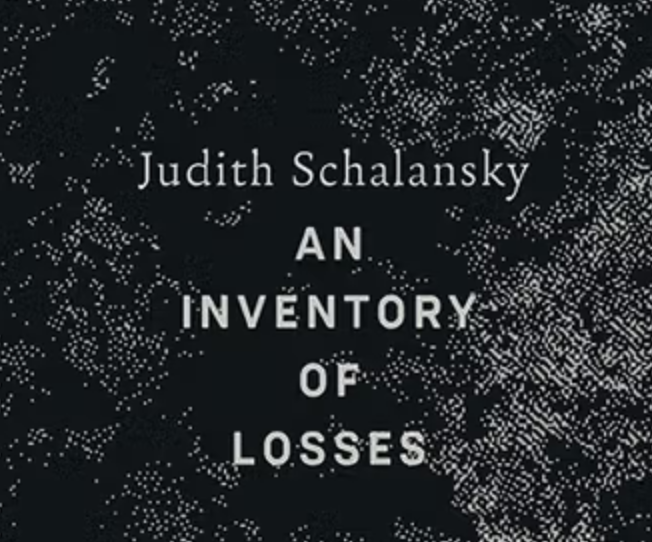
“Being alive means experiencing loss,” pronounces Judith Schalansky in the preface to Inventory of Losses. I discovered this book while researching Sappho for my interview with the band Old Songs, which released its tour de force Many Sapphos last year. Schalansky offered a different way to engage Sappho’s fragments. If a mere seven percent of Sappho’s poetry survives, then what do we really know about Sappho’s body of work except, perhaps, the experience of loss, Schalansky intimates.
Schalanksy contemplates the losses of geographical formations, edifices, animals, cultural icons, relics, texts and artifacts. In the book, we meet the extinct Caspian tiger, last documented in the wilderness of Azerbaijan and Iran in the 1960s. Hunting and despoiled habitat account for its demise. We encounter the reimagined inhabitants of the atoll Tuanaki, which collapsed into the Pacific after an earthquake in the 1840s. Maps after 1875 bear no trace of it. In that void, Earth possibly lost a peace-loving civilization that favored dancing over war. And we bear witness to the destruction of the bulk of Manichaeism’s sacred texts, which may have riled the ruling classes because of its embrace of multiple belief systems and emphasis on humanity’s imperfection.
Schalansky processes each subject through writing that integrates essay and storytelling. For example, in her treatment of Kinau’s celebrated selenographs, or lunar maps, most of which burned in the fires of World War II, she writes:
“The moon has stayed the same, and the universe with its constantly twinkling lights of long-extinguished stars is the eternally old, historic place. I was a person like any other for whom the moon, like an ever-painful phantom limb, was merely a reminder of a now-lost state of perfection ….”
Readers might luxuriate in the language while synthesizing evidentiary scraps from the past with speculation about what really happened and why it matters. In writing through artifacts of absence, perhaps the despair of loss gives way to the awe of possibility and allows a reckoning with a legacy of maliciousness, fallibility, ignorance and benign neglect.
One of the more fascinating of the book’s relics is Guericke’s unicorn, macabrely assembled in the 1660s from an array of disparate ice-age animal skeletons, possibly including the woolly rhinoceros and mammoth. It is unclear whether Guericke promoted the Franken-specimen as undisputed evidence of the existence of unicorns or whether citizenry of that era believed it. Certainly, interest in unicorns predates Guericke, as today at The Cloisters in New York you can view the grand French tapestries, circa 1500, depicting a “hunt” for unicorns.
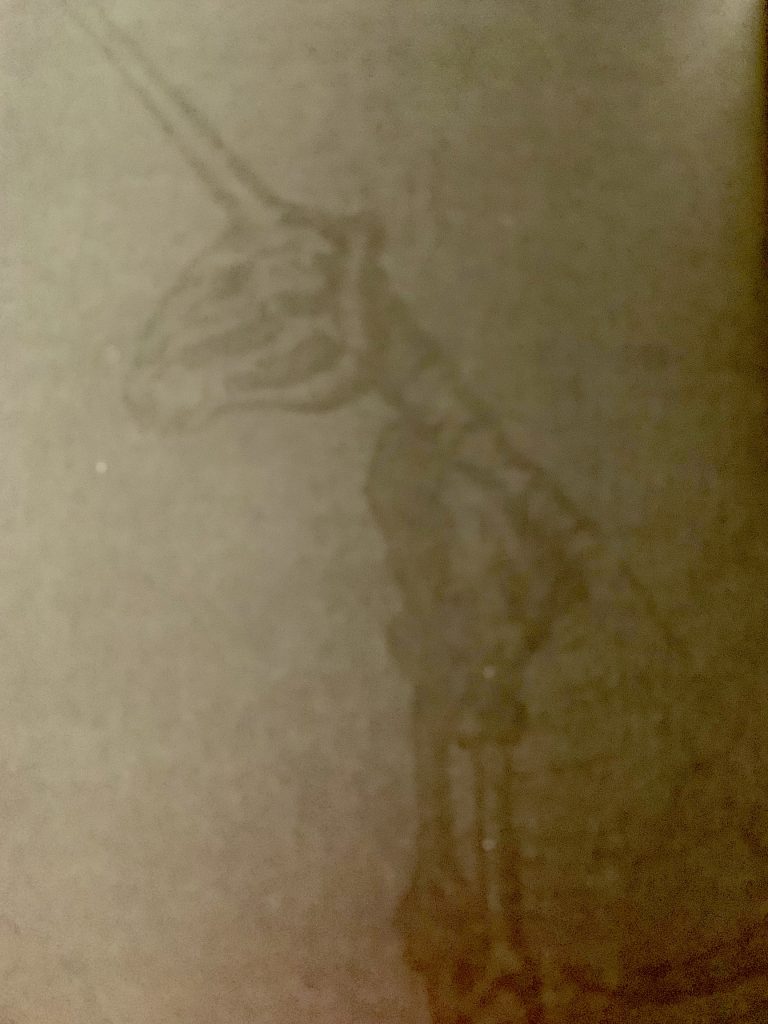
The faded resolution of illustrations in the book punctuates the ambience of loss.
Why would humanity need to believe in a single-horned Equus? We appear to have a penchant for inventing anomalies, and by extension monsters, yet outlandishness is historically Earth’s signature. One person’s monster is another’s snakehead fish, spotted lanternfly, velociraptor or axolotl. With grotesqueries all about us, we continue to construct more, whether for distraction or because we cannot help our own abject hard-wiring. I mean, how many sequels are too many for a horror flick?
New Directions providentially released the English translation (from German) of Inventory of Losses in 2020, a year of profound global heartbreaking loss. I daresay I need not belabor this point by recounting the pandemic that slashed and burned our collective homeostasis. The German edition predates the pandemic, but the translation’s entry into the lexicon in 2020 feels apt. Its arrival on the literary scene, eclipsed by sickness and suffering, constitutes a loss of its own.
StartleResponse.com proposes this book to a wounded populace as a meditation, a tool for perseverance amid loss. Perhaps loss as a constant confers some modicum of solace. Loss is enduring, reliable, unflappable. Its permanence might offer some sense of stability amid chaos, change and lack of control.
We pair Schalansky’s treasure with a jewel from the taxonomic past: the extinct Bachman’s warbler, a.k.a. “Bachman’s swamp warbler.”
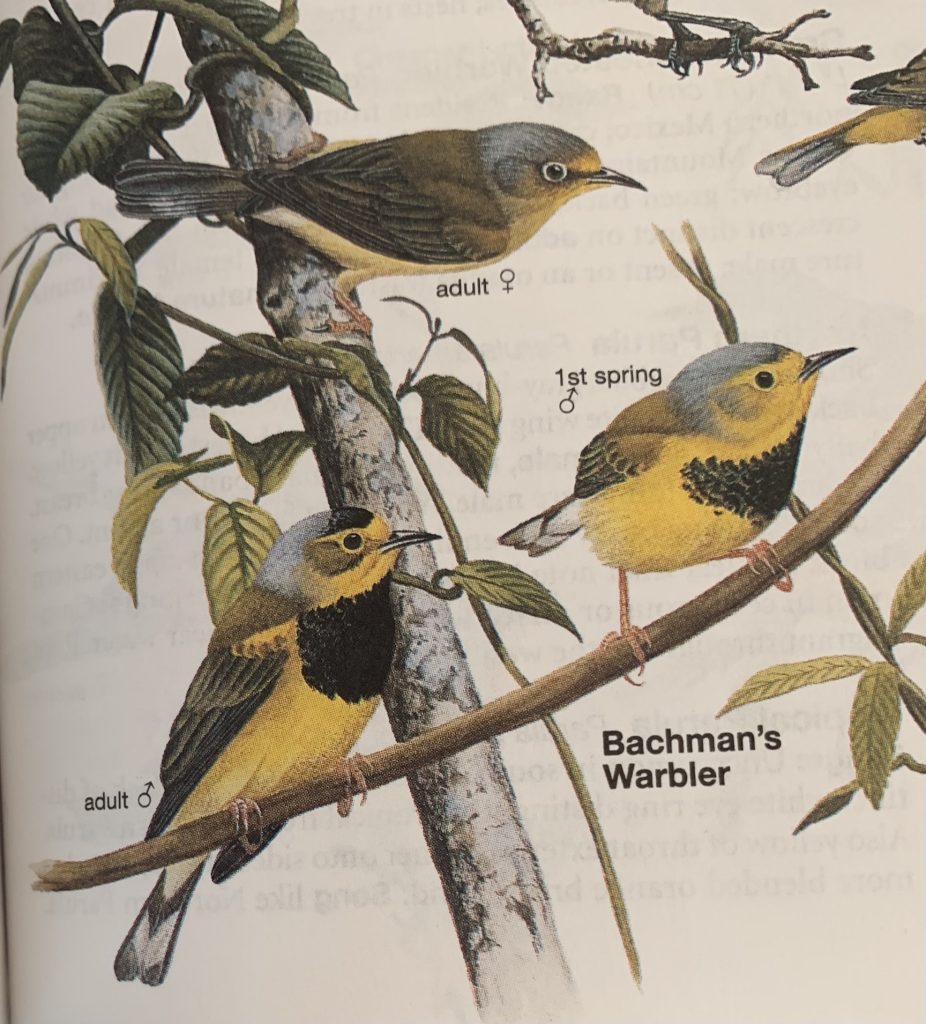
Right: The Art of Audubon: The Complete Birds and Mammals, 1979, The New York Times Books.
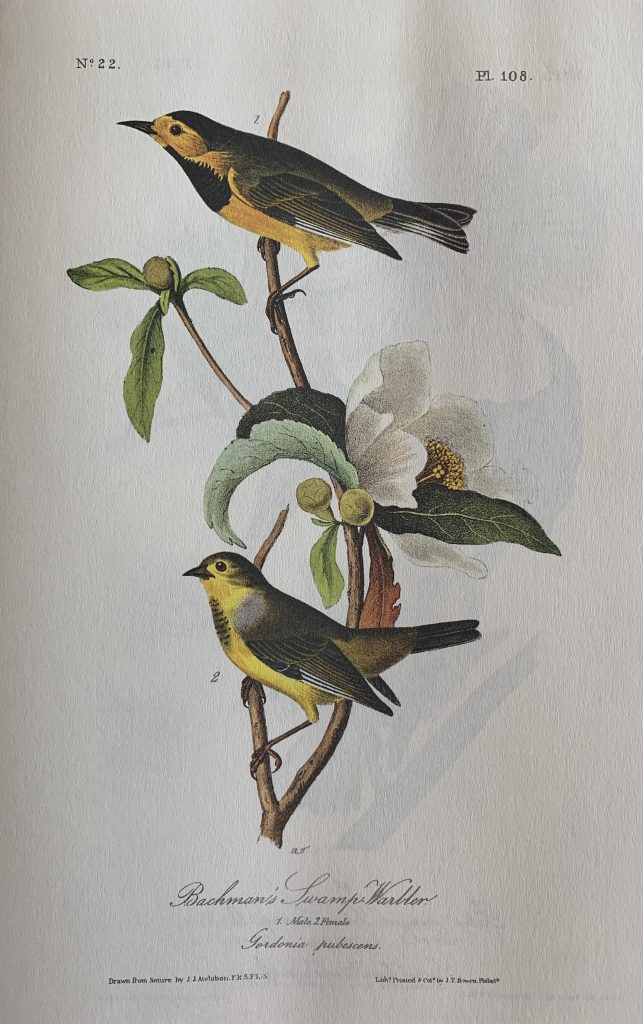
When at the turn of the 19th century Audubon painted the elegant, proud-breasted warbler taking cover in the magnolias of the Carolina swamps, he, despite his personal ethical contradictions, probably understood something about inventorying losses. The image now transcends to collective memory, as the U.S. Fish and Wildlife service officially announced the rare bird’s extinction in October 2023.
I was in my truck listening to the local NPR station when I heard the news. The reporter sounded emotional. I wondered whether he, like me, was an amateur birder, or “citizen scientist” as the local park ranger calls us, or if he was simply having a crap day. In any case, the news cut deeply, and I thought of all the birders, rangers, ornithologists and other invested parties who have been patiently watching for a glimpse of the understated and reclusive little yellow bird since the last sighting in the 1960s.
Birders are an eccentric breed. We travel long distances for a chance at a sighting based on rumors telegraphed through loose birding networks or the eBird app, where we catalogue all of our birding expeditions, and we camp out for hours in one after another mosquito-infested, steamy spots in acts of unsubstantiated hope. When we sight a painted bunting, cattle egret, roseate spoonbill or scarlet tanager, the experience is Siddharthaesque. When we notice the diminishment of the bobolink, veery, kinglet or parula in a particular swath of wood or wetland, grief and worry are consuming.
While Bachman’s warbler remained “critically endangered,” hope survived. Perhaps the powerful monied lobbies of the South could have curtailed their efforts to develop every last acre of species-sustaining, greenhouse gas-resistant wetlands, resulting in two warblers supernaturally finding each other and breeding a new generation. With the announcement of “presumed extinction,” however, the proverbial cable snaps in the elevator. Metaphor falters. The warbler in the wetland becomes the canary in the coal mine.
And yet more than 300 species of warbler continue to fly across six continents. If you spot one, common or rare, please drop us a line at StartleResponse.com.